
When you book a windscreen replacement, the glass is the obvious part of the job. On many newer vehicles, there’s another essential step: ADAS calibration.
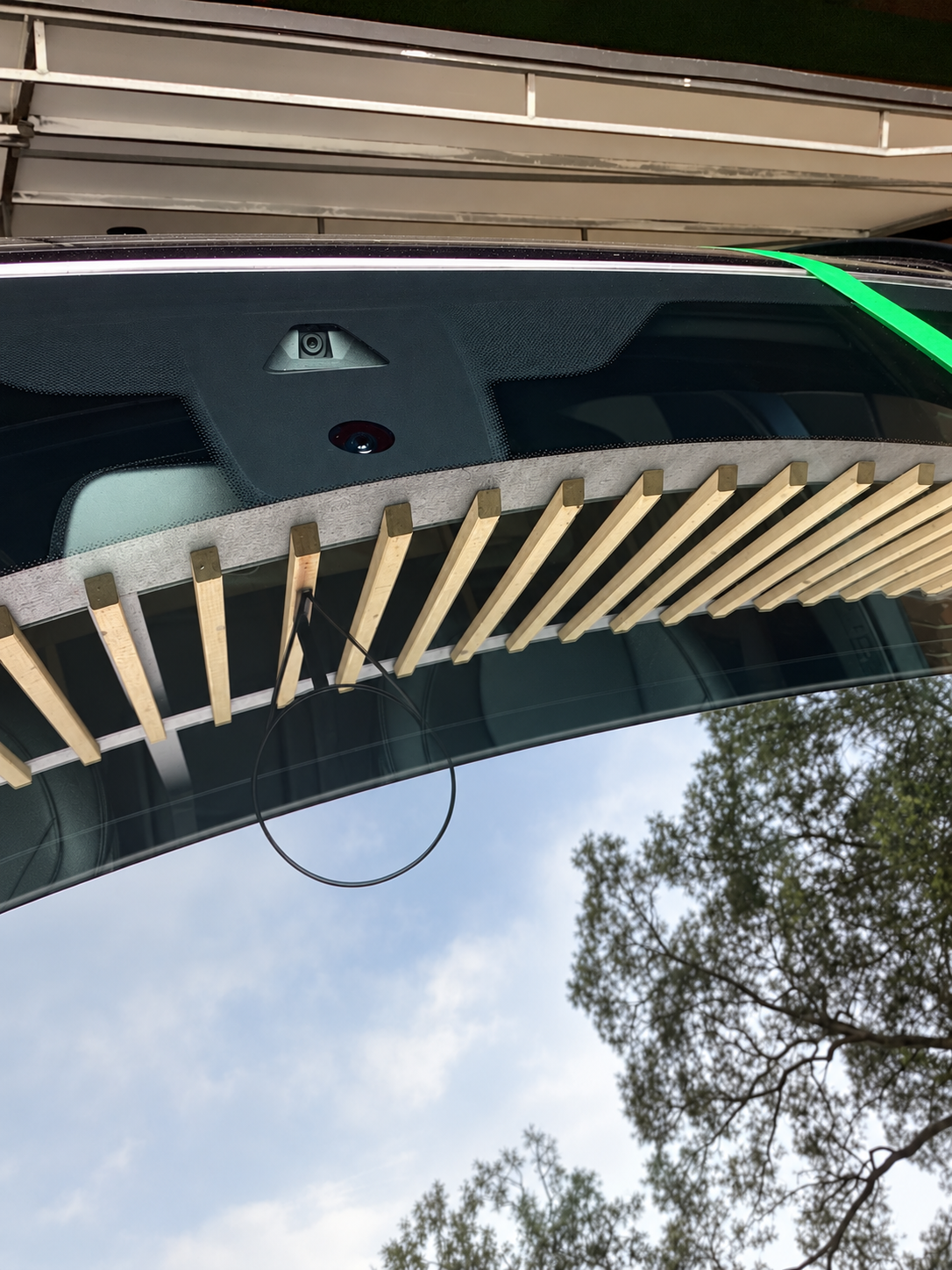
The camera behind your rear-view mirror supports safety features such as emergency braking and lane keeping. When the windscreen is replaced, that camera often needs to be calibrated before the job is complete.
At Legacy Autoglass, we confirm your vehicle’s requirements before booking you in, explain the process, and handle both the replacement and any required calibration for you.
What does the windscreen camera do?
ADAS stands for Advanced Driver Assistance Systems. These systems use cameras, radar and other sensors to help drivers recognise hazards and assist with certain driving tasks.
Depending on the vehicle, a camera looking through the windscreen can support features such as:
Lane Departure Warning: Alerts the driver when the vehicle drifts out of its lane unintentionally.
Lane Keep Assist: Provides steering assistance to help keep the vehicle in its lane.
Autonomous Emergency Braking: Can apply the brakes automatically when a potential collision is detected, helping avoid it or reduce its severity.
Adaptive Cruise Control: Adjusts speed to maintain a set following distance from traffic ahead.
Traffic Sign Recognition: Recognises supported road signs and displays them to the driver.
Equipment varies by make, model, year and trim. Some features combine information from the windscreen camera with sensors elsewhere on the vehicle.
These systems work within particular conditions and limits. The driver must always remain attentive and in control.
Why can replacing the windscreen require calibration?
The camera relies on its exact position and its view through the glass to interpret the road ahead. A replacement changes the glass it looks through, and usually involves removing and refitting the camera on its mounting bracket.
Even when the same camera is reused, the manufacturer’s procedure may require calibration after the windscreen is replaced. Reconnecting the camera does not complete that procedure on its own.
Calibration makes sure the camera knows exactly where it’s pointing, so it judges distances and lane positions correctly. Where calibration is specified, it is an essential part of completing the replacement properly.
Does every vehicle need it?
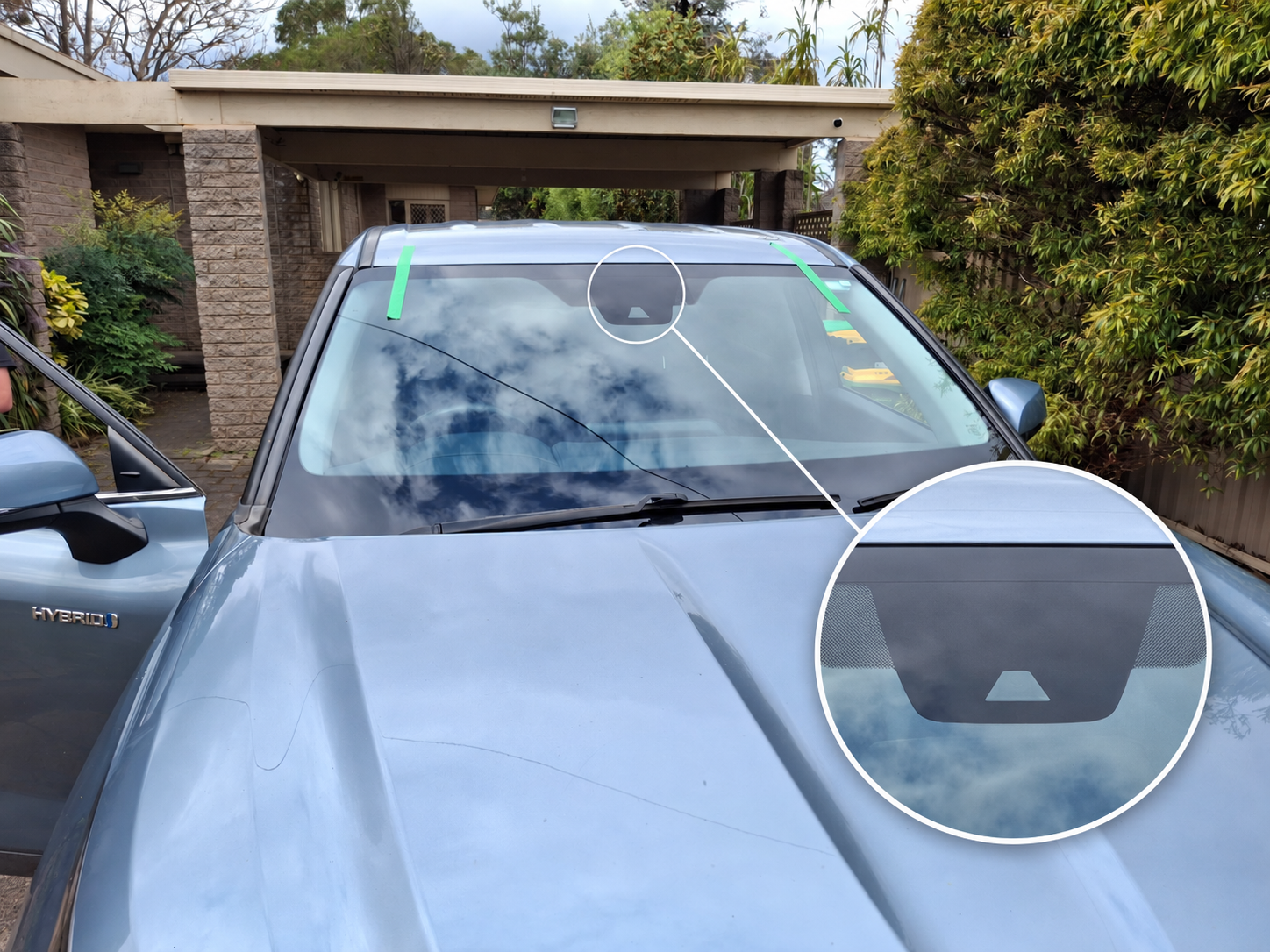
No. A housing behind the rear-view mirror doesn’t automatically mean your vehicle needs camera calibration. It might hold a rain sensor, a camera, or another type of sensor.
Some older city-braking systems use a laser sensor rather than a camera, and these have different requirements again. Equipment can also differ between versions of the same model, so the vehicle’s age isn’t a reliable guide.
That’s why we check your specific vehicle rather than guessing. When requesting a quote, provide your registration, make, model and year. A photo of the area behind your rear-view mirror also helps us confirm the right glass and equipment.
No warning light does not mean calibration is unnecessary
A dashboard warning can flag a problem, but the absence of one doesn’t mean the camera is calibrated correctly, or that calibration isn’t needed.
Likewise, a vehicle that seems to drive normally isn’t proof that its driver assistance systems are working within specification.
An incorrectly calibrated camera can affect hazard detection, lane recognition, warnings, or steering and braking assistance, depending on the vehicle. That’s why calibration requirements are always checked against your vehicle’s information.
Static and dynamic calibration: what’s the difference?
The manufacturer’s procedure determines the method. Some vehicles need static calibration, some need dynamic calibration, and some need both.
Static calibration
Static calibration takes place while the vehicle is stationary. Specialist targets and measuring equipment are positioned to the vehicle’s specifications so the camera can set its reference points.
This requires a controlled indoor space with suitable flooring, lighting and room for the equipment, along with correct vehicle preparation and target placement.
Dynamic calibration
Dynamic calibration involves a prescribed road drive. Depending on the vehicle, it can require clear road markings, good visibility and a particular speed range.
The technician follows the vehicle-specific instructions, uses diagnostic equipment where specified, and confirms the calibration completed successfully. An ordinary drive after replacement should not be assumed to complete it.
How Legacy Autoglass handles the process
Before booking your replacement, we confirm whether calibration is required and whether the procedure is static, dynamic or both. Then we explain how the work will be done and include it in your quote.
As a mobile service, we can complete the windscreen replacement at your location. For dynamic calibration, we carry out the required road drive under suitable conditions. Where static calibration is required, we arrange the workshop side of things, which may include us driving your vehicle to a suitable workshop.
You don’t need to organise calibration separately. Legacy Autoglass handles the full job, from replacing the windscreen through to completed calibration.
What should your calibration report show?
Calibration documentation should identify your vehicle, the system calibrated, the date and the outcome.
Our customer documentation includes the calibration result generated by the diagnostic equipment, alongside the technician’s job record. Together, these provide a clear record of the calibration performed.
A diagnostic scan and a calibration result serve different purposes. A scan lists fault codes reported by the systems checked. A scan showing no fault codes does not, by itself, show that the required calibration was completed successfully.
Keep your calibration documentation with your vehicle’s service and repair records, as your insurer may ask for it after a windscreen replacement.
The report reflects the work and results at the time of service. Later repairs, modifications or damage can affect the system, so any further calibration needs should be assessed at that point.
What to ask before you book
A price for the glass alone may not include the calibration your vehicle needs. Before you book, ask:
Have you checked whether my vehicle requires calibration?
Does the quote include the required calibration?
Who handles any workshop arrangements?
Will I receive documentation showing my vehicle, the system calibrated and the calibration result?
At Legacy Autoglass, the answer to all four is yes.
Booking a windscreen replacement in Melbourne
If you’re unsure whether your vehicle needs ADAS calibration, send Legacy Autoglass your vehicle details. We’ll check the requirements, explain the process and give you a quote that covers the complete job.
Get a quote or call 0423 714 497 to speak with our team. You can also learn more about our windscreen replacement and ADAS calibration service.