

Whether a windscreen chip can be repaired depends on its size, location and condition, as well as whether repair resin can properly fill the damage. The familiar “smaller than a $2 coin” guide is a useful starting point, but it cannot tell the whole story.
When I inspect a damaged windscreen at Legacy Autoglass, I look at how these factors work together. Here is what I check, why I sometimes recommend replacement, and what you can realistically expect from a chip repair.
What does a technician check first?
I start with the size of the chip, its position on the windscreen and roadworthiness considerations. I also check the condition of the damage, including contamination and signs of a previous repair attempt.
The decision involves more than measuring the visible impact point. A repair relies on resin reaching the small cavities and cracks within the damage. I need to assess whether I can achieve a proper fill and check the result.
In my experience, chips with a larger internal air cavity often fill well. That does not mean a larger chip is automatically a better repair candidate: the internal shape of the damage is only one part of the assessment.
Is a chip smaller than a $2 coin always repairable?
No. The $2 coin comparison helps customers describe the approximate size of a chip, but it is a guide rather than a guarantee.
I have repaired some chips larger than a $2 coin, but that is not possible in every case. Equally, a small chip’s location or condition may lead to a replacement recommendation.
The useful question is not simply, “How big is it?” It is, “Can this particular damage be filled properly, in this location and in its current condition?”
A real example: three chips on a Ford Transit Custom
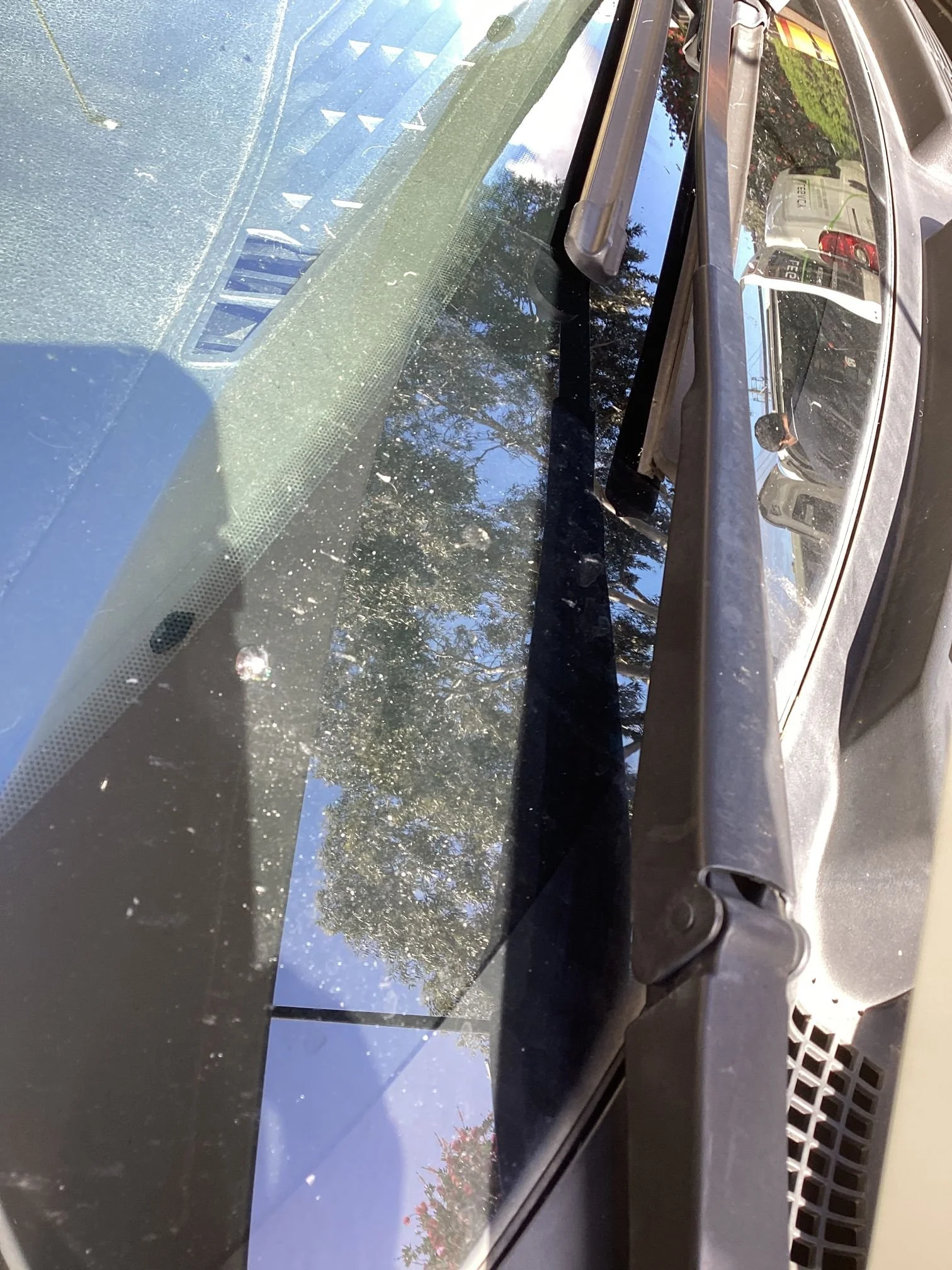
The chip in the black ceramic border. I recommended replacement because I would not be able to adequately observe the filling process in this location.
We replaced a windscreen on a Ford Transit Custom that had three chips. Two were in the main glass area. The third was in the black ceramic border of the windscreen.
That third chip was the deciding factor for me. Its position meant I would not be able to see the damage clearly enough to monitor the resin filling it. Because I could not be confident of a proper fill, I recommended replacing the windscreen.
My recommendation was based on this particular chip and the difficulty of checking the fill. Each damaged windscreen needs its own assessment.
The example shows why a small-looking impact can still need more than a chip repair. Its position can matter just as much as its size.
Why does the age of a chip matter?
A chip’s condition can change while it remains exposed. Dirt and moisture entering the impact point can block the microscopic pathways the resin needs to travel through.
That contamination can make a complete fill more difficult. That is why I encourage customers to arrange an assessment promptly rather than leaving the damage exposed for weeks or months.
However, an older chip is not the only one that can contain a blockage. The original impact can force fine glass dust into the damaged area. Even a fresh chip may therefore have internal obstructions that affect how it fills.
What can you do before the appointment?
I recommend placing a small piece of clear tape over the impact point as soon as practical to help reduce contamination before assessment. Tape is a temporary protective measure; it does not repair or stabilise the glass.
When you contact us, mention when you first noticed the chip and whether anyone has already attempted a repair. That information helps explain what may be present inside the damage.
Will the chip disappear after repair?
A chip repair is not a cosmetic restoration. A visible mark can remain after the damage has been filled.
This is one of the first things I explain before starting work. The purpose of the repair is to fill and stabilise the damaged area, helping reduce the risk of further cracking. It is not a promise that the windscreen will look untouched or that the damage can never spread.
I often compare the result to a cut that heals but leaves a scar. The appearance may improve, but expecting the chip to disappear completely can lead to disappointment even when the fill has worked well.
The shape of the small cracks within each chip influences how visible the finished repair will be. Two repairs can therefore look different without appearance alone explaining the quality of the result.
How do I check the completed repair?
I place a white background behind the repaired area to help inspect the fill. Air remaining at the edges can appear dark or blackish against that background.
Contamination can also leave small pockets of trapped air within the damage, sometimes visible as tiny dark dots. These observations help me assess where resin has reached and whether air remains.
This is a technician’s inspection method, rather than a simple pass-or-fail test for a customer to perform. A remaining mark does not, by itself, establish whether a repair has succeeded or failed.
Can a technician assess a chip from a photo?
Clear photographs help with my initial assessment. I ask for a close-up of each chip and a wider view showing where it sits on the windscreen.
A photo may also reveal signs of an earlier repair attempt. However, sometimes I cannot identify an earlier repair attempt until I inspect the glass in person. Photographs help establish what needs checking; they cannot always settle the repair decision.
For a useful initial assessment, send:
A clear close-up of each damaged area, with glare reduced as much as possible.
A wider photograph showing each chip’s position on the windscreen.
Your vehicle’s make, model and year.
Any known history of the damage, including previous repair attempts.
If you are unsure which window is damaged, include a wider photograph of the vehicle too. For example, when a customer asks us about “rear glass”, they may mean a rear door window rather than the back windscreen. A photograph helps avoid that mix-up.
Get your windscreen damage assessed
A chip’s size is only the beginning of the assessment. Its location, contamination, internal shape and any previous repair all help determine the appropriate next step.
At Legacy Autoglass, we provide mobile chip repairs and windscreen replacement across Melbourne’s Eastern and South-Eastern suburbs. Send clear photographs of the damage or call 0423 714 497 for an initial assessment.